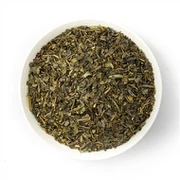
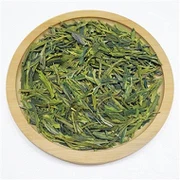
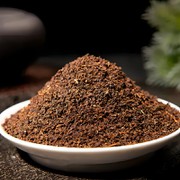
Bead Tea Production Method
Jul 07, 2022
1. Fix the green
The technique of finishing the initial production of pearl tea is basically the same as that of the initial production of Mei tea. In the specific operation, the main difference is that the pearl tea adopts the method of first boring and then throwing. After the fresh leaves are put into the pot, use the 84 type greening machine to fry for 3 to 4 minutes, and the 64 type greening machine for 2.5 to 3 minutes. When a lot of water vapor rushes out from the seam of the lid, remove the lid and stir-fry until the leaves turn dark green and the stems are separated.
The water content of the green leaves is 60-64%, and the weight loss is about 35-40%. The degree of greening: the leaves are not yellow, the color is green, and the leaves are soft and not burnt. There are three functions of killing green, one is to completely destroy the activity of enzymes and maintain chlorophyll. There is a polyphenol oxidase in tea leaves. If the activity of this enzyme is not destroyed in time, the tea leaves will turn red. Therefore, the first process of all green tea is to kill the green tea.
The second function is to distribute water and grass gas, and the third is to promote the formation of inclusions, reduce the water content, soften the tea leaves, and facilitate rolling and shaping.
At present, the fixing machines used in the pearl tea producing areas are mainly "pot-type" fixing machines. The specific method of killing the green is to heat the pot with coal, firewood and other fuels and then put in an appropriate amount of fresh leaves. After tossing and frying with a lid, to achieve moderate greening, the time is about seven or eight minutes. It is very important to control the temperature when killing greens. High temperature fixing, first high and then low", that is, first use high temperature to quickly destroy the activity of polyphenol oxidase, then lower the pot temperature, and continue to fix to the end. But the temperature should not be too high. Excessive temperature will destroy more chlorophyll, and even fry the tea leaves, which will affect the quality.
Finishing must also pay attention to the combination of throwing boredom. Stir-frying can quickly dissipate water, which is conducive to the aroma and green color of the tea. Stir-frying can quickly increase the leaf temperature, destroy the enzyme activity, and make the leaves soft, which is easy to roll into strips; but if only stir-frying or stir-frying time If it is too long, it will reduce the aroma of the tea leaves, and even cause the leaf color to be "stuffy yellow". Since pearl tea is more difficult to shape than other green teas, the water content of the green leaves is higher, and the frying time is appropriately longer. When greening, the raw materials are different in age and tenderness, and they should be treated differently. The raw materials have high tenderness and high water content, while the raw materials are coarse and old with low water content. Leaves can evaporate more than a part, and old leaves should lose less water.
There are also some tea areas that use a roller fixing machine. This type of fixing machine is a continuous operation method. One end of the roller is continuously fed, and the other end is continuously ejected. The work efficiency is high and the operation is simple. In addition, some tea areas have also used trough-type finishing machines.
Appropriate sensory requirements for greening are dark green in color, no red stalks, red leaves and dark yellow, no spots and bursts, buds and leaves are intact and continuously broken, no grass gas, no smoke and coke gas, no water and sultry yellow and cooked taste, and the hands are broken and tender stems constantly. , it can be formed into a ball when pinched by hand, and can be spread out when released.
2. Knead
The machines and methods used for rolling bead tea are basically the same as those used for eyebrow tea. The difference is that the rolling time of bead tea is slightly shorter than that of eyebrow tea, and the pressure is lighter than that of eyebrow tea. In order to keep the leaves soft, the green leaves are immediately rolled without drying. Generally, the young leaves are kneaded for about 10 to 15 minutes, and the old leaves are rubbed for 15 to 20 minutes. The degree of rolling is as follows: the cell destruction rate is 45-60%, the sliver rate of young leaves is about 90%, and the sliver rate of grade 4-5 is about 85%. If the kneading time is too short, the sliver rate is poor, which is not conducive to frying the pearl tea granules in the shape of disk flowers. The kneaded leaves should be properly unblocked and dried in time to prevent the leaves from turning yellow.
3. Dry
The drying process of pearl tea includes four procedures: frying Erqing, small pot, paired pot and large pot.
(1) Fried Erqing: The main purpose of fried Erqing is to evaporate part of the water. Generally, the water content of Erqingye in spring tea is about 40%. The temperature of summer tea is high, and the leaves lose water quickly when they are fried. The water content of Erqingye is higher than that of spring tea, about 45%.
(2) Frying a small pot, a pair of pots and a large pot: fry the small pot with a pot temperature of 120-160 °C, and the amount of leaves thrown in each pot is 12.5-15 kg Erqingye. The time is about 45 minutes, and the water content is 30-35%. Moderate. Frying the right pot is the key to the roundness of pearl tea. The temperature of the pot requires a long stir-fry in order to make it round. The pot temperature is about 60 ℃, and the amount of leaves to be thrown is combined by the amount of leaves in the two small pots. The time is about 3 hours, and it is moderate to fry until the water content is 15-20%. The temperature of the frying cauldron should be controlled from low to high, generally at 60-80 ℃, and the amount of leaves to be added is combined by the amount of leaves in the two-pot frying pan. When frying a large pot, cover the pot with a cover, but the time should not be too long, otherwise the leaves will be yellow and ripe, the aroma will be low, and the bottom of the leaves will turn yellow.
The frying time of pearl tea is long, and the drying process only takes more than 5 hours. In order to shorten the frying time, Shihuang, Yahuang and other places in Shengzhou City have summed up the method of high temperature, even fire, short time and less cover. . That is, the temperature of the small pot, the opposite pot and the large pot are all high, and the temperature difference is small, and the frying time is shortened. The product of this method is round and firm in appearance, green in color, high in fragrance of soup and bright at the bottom of leaves. However, this frying method is suitable for fresh leaves with sturdy leaves in alpine tea areas or fertile soil tea areas, and is a good way to improve the quality of this tea. The granules are loose and cannot be adapted, so this method should be adopted according to the tea conditions. In addition, since the end of the 1970s, Xinchang County has taken advantage of the favorable conditions of abundant small hydropower resources to implement "electric tea making", which saves fuel and improves the environmental conditions of the factory area. The temperature is easy to control, and the quality of tea is improved.